
Heated Interlock Driveway
In the GTA, expect to pay $25 to $66 per square foot for a heated interlock driveway, pavers and heating system included, according to Floor Heating Systems. Of the three common surfaces, pavers are the priciest to heat, and heated concrete and heated asphalt both come in lower.
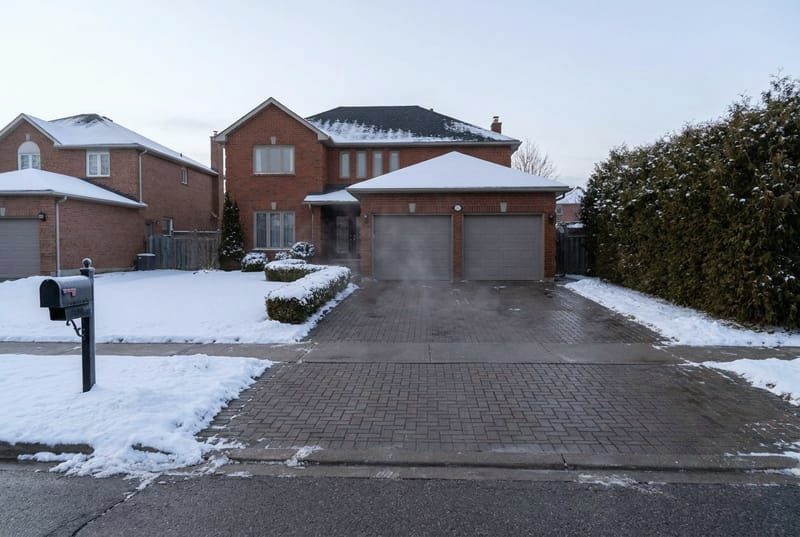
How Does Heated Interlock Compare With Concrete and Asphalt?
These square foot prices are for the GTA. The no-heat column covers the new surface alone. The heated column throws in the heating system too. All the numbers are from Floor Heating Systems.
| Surface | Per sq ft, no heat | Per sq ft, heated |
|---|---|---|
| Interlock pavers | $14–$42 | $25–$66 |
| Concrete | $9–$19 | $17–$37 |
| Asphalt | $7–$16 | $16–$36 |
Pulling out an old driveway first runs $2 to $4 per square foot around the GTA, Floor Heating Systems says.
Where the Heating Sits Under the Pavers
The mats or coils rest in the bedding sand, Unilock explains. That is the thin sand layer the pavers get set into. For heated driveways Unilock also likes permeable pavers. Water drains down between them instead of pooling on top.
Electric or Hot Water Heating
You have two options. Electric systems run on heating cables. Hydronic systems send hot water from a gas boiler through tubing under the pavers.
Priced by system instead, installers' published prices for a complete heated driveway run from $20 to $60 a square foot for electric and $40 to $95 for hot water, from Precision Landscaping and Action Home Services, so they won't line up exactly with the paver-and-heat prices from Floor Heating Systems. A typical single-car driveway covers roughly 400 sq ft, while a two-car one spans about 600 sq ft.
| Driveway | Installed electric | Installed hydronic |
|---|---|---|
| Single, 400 sq ft | $8,000–$24,000 | $16,000–$38,000 |
| Double, 600 sq ft | $12,000–$36,000 | $24,000–$57,000 |
Treat these as estimates, not a quote. Your installer sets the final price during the site visit.
The Cost of Running Through One Snowfall
For one snowfall, figure on the system running 4 to 6 hours. Your electricity plan and the hour you run it set the price. These figures use the winter rates the Ontario Energy Board has already set for 1 November 2026.
| Plan and hours | Electric, 400 sq ft | Electric, 600 sq ft |
|---|---|---|
| Ultra-Low Overnight (11 p.m.–7 a.m.) | $3–$4 | $4–$7 |
| Time-of-Use off-peak (evenings and nights on weekdays, plus weekends) | $7–$11 | $11–$16 |
| Tiered (the first 1,000 kWh each month) | $9–$13 | $13–$20 |
| Time-of-Use mid-peak (weekday late morning and afternoon, 11 a.m.–5 p.m.) | $12–$18 | $18–$26 |
| Time-of-Use on-peak (weekday mornings, 7–11 a.m., and the evening rush, 5–7 p.m.) | $15–$23 | $23–$34 |
| Ultra-Low Overnight on-peak (weekday evenings, 4–9 p.m.) | $30–$45 | $45–$68 |
Hydronic heat costs far less in gas per snowfall. A single driveway burns about $2 to $3, a double $3 to $5, before HST.
Toronto Pearson saw an average of 114.5 cm of snow a year over 1991 to 2020. That fell across 44.7 days of at least 0.2 cm, and 7.2 days reaching 5 cm or more.
Can You Add Heat to the Driveway You Already Have?
Electric retrofit options exist, but hydronic heating cannot go under an existing driveway, Unilock notes. This kind of job is called a retrofit. Retrofit electric heat costs $9–$22 for each square foot, Floor Heating Systems says.
Warmup outlines two retrofit approaches. In one, cables are laid on the old driveway and covered with a new 2-inch layer of asphalt, which leaves an asphalt surface, so for an interlock driveway ask your installer which of the two suits it.
Common Questions
How many years does a heated driveway hold up?
One manufacturer, WarmlyYours, puts the lifespan of an electric snow melt system at more than 30 years. A hydronic boiler gets 20 to 25 years.
Is it cheaper to heat only the tire tracks?
Heating just the two strips the wheels travel on works out to $9–$22 for each heated square foot, Floor Heating Systems says. That price is per square foot of heated area, not the full driveway.
What does a heated walkway cost per hour?
An electric walkway covering 100 sq ft pulls 5 kW. At off-peak rates it runs about $0.46 an hour, and roughly $0.95 an hour when rates are on-peak.